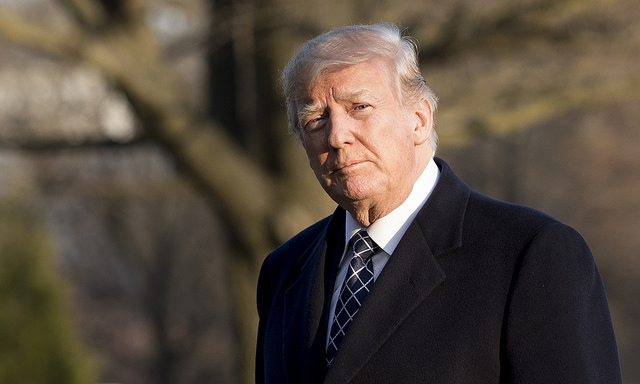
A growing trade confrontation between the United States and Europe, sparked by President Donald Trump’s renewed push to acquire Greenland, is raising fears of sharp price increases, investment uncertainty, and lasting damage to transatlantic economic ties.
Tariffs and the ‘Trade Bazooka’: Rising Tensions Across the Atlantic
Trump escalated tensions over the weekend by announcing plans to impose new tariffs on imports from several European nations beginning February 1. The proposed measures would place a 10% duty on goods from Denmark, Finland, France, Germany, the Netherlands, Norway, Sweden, and the United Kingdom. If negotiations fail to produce an agreement by June 1, those tariffs would rise to 25%.
The move triggered swift reactions across Europe. Senior officials from multiple countries held emergency consultations, while French President Emmanuel Macron urged the European Union to consider deploying its so-called anti-coercion instrument — often referred to as the EU’s “trade bazooka.” This mechanism allows the bloc to retaliate against economic pressure by restricting market access, suspending business licenses, or imposing export controls.
EU officials signaled that countermeasures remain a real option. The bloc has also been weighing whether to revive a package of delayed retaliatory tariffs worth tens of billions of euros that were shelved last year following a tentative trade truce with Washington.
Economists warn that the standoff could quickly spill into broader economic damage. Heightened tariffs would raise costs for businesses and consumers on both sides of the Atlantic, while uncertainty alone may discourage investment. Analysts say European economic growth could take a noticeable hit this year if higher trade barriers remain in place.
Business Uncertainty and Long-Term Risks for the U.S. and Europe
Businesses are already sensitive to the unpredictability of U.S. trade policy. Previous cycles of threatened and reversed tariffs led many American companies to slow hiring and postpone expansion plans, waiting for clarity that never fully arrived. A renewed period of instability could repeat that pattern.
While the EU’s “trade bazooka” is a powerful tool, experts caution it would not be deployed overnight. Implementing measures such as service taxes or license suspensions would likely take months, potentially prolonging uncertainty. Still, European leaders appear increasingly willing to confront Washington directly rather than absorb repeated trade threats.
The dispute also risks undermining fragile trade agreements negotiated last year between the U.S. and Europe. While some European leaders supported those deals as a way to avoid a damaging tariff war, others criticized them as unbalanced. Trump’s latest tariff threats have cast fresh doubt over whether those agreements will survive.
Trade between the United States and the targeted European countries is substantial, totaling hundreds of billions of dollars annually. Any disruption would ripple across industries ranging from automobiles and machinery to pharmaceuticals and consumer goods. However, Trump’s strategy may leave room for workarounds: because the tariffs target individual countries rather than the entire EU, exporters could potentially reroute goods through other member states within the bloc’s open internal market.
Still, economists argue that the long-term danger lies less in the immediate tariff rate and more in eroding trust. Uncertainty over whether tariffs will be imposed, raised, or withdrawn makes long-term planning difficult. Companies may choose to invest elsewhere rather than risk sudden policy shifts.
Meanwhile, America’s trading partners are accelerating efforts to diversify. Europe has finalized a long-delayed trade agreement with South America’s Mercosur bloc, while other allies are strengthening economic ties outside the U.S. orbit. Such moves could permanently reduce America’s influence in global trade networks.
Critics warn that the Greenland-driven trade conflict could ultimately weaken U.S. competitiveness, discourage factory construction, and push allies closer to rival powers. As tensions rise, what began as a geopolitical dispute risks becoming a full-scale economic confrontation — one that could reshape global trade patterns far beyond Greenland itself.