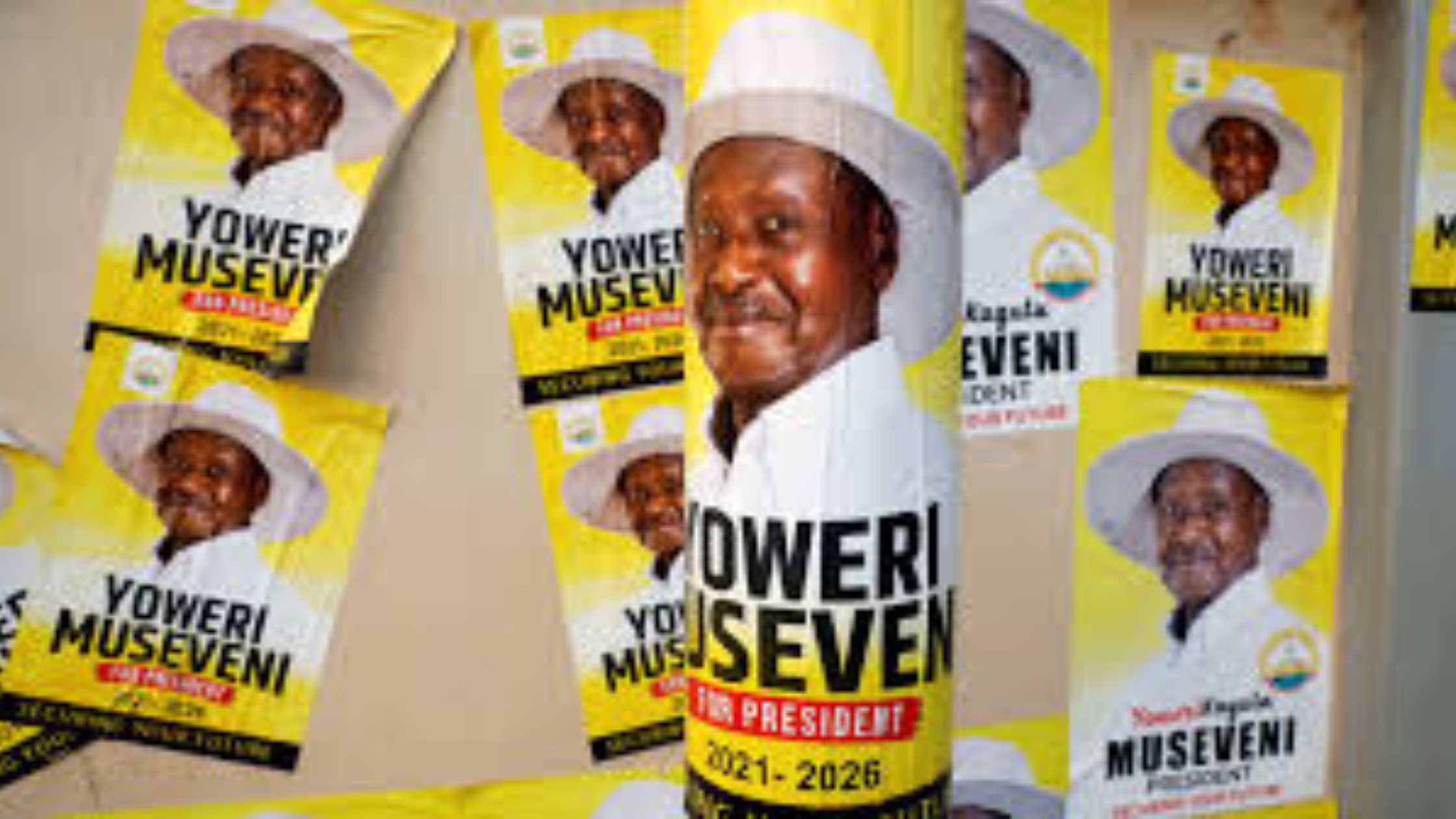
Uganda’s veteran leader Yoweri Museveni has been declared the winner of the country’s presidential election, securing another term in office after a vote overshadowed by security operations, internet restrictions, and allegations of electoral misconduct.
The announcement, made by the Electoral Commission in Kampala, confirmed that Museveni received nearly 72% of the total vote. His main rival, opposition figure Bobi Wine, trailed with approximately 24%, according to official results.
At 81, Museveni’s latest victory cements his grip on power more than three decades after he first took control of the country in 1986. The result strengthens his political standing at a time when public debate is intensifying over leadership transition and succession.
Opposition Rejects Results, Raises Alarm
Bobi Wine, a former pop star turned political challenger whose real name is Robert Kyagulanyi, dismissed the election outcome and accused authorities of orchestrating widespread fraud. The vote took place during a nationwide internet shutdown, which the government justified as a necessary step to counter false information.
Following the announcement of results, Wine reported that security forces raided his residence. In a message shared online, he claimed military and police units cut electricity, disabled surveillance systems, and surrounded his home. Wine later said he managed to flee and was no longer at his residence, while alleging that his family members were being held under house arrest—claims that could not be independently confirmed.
Clashes Reported After Polls Close
Tensions escalated in parts of central Uganda after voting ended. Police said several people were killed and others injured during confrontations with groups they described as opposition-linked. Authorities stated officers acted in self-defense.
Opposition figures challenged that narrative, with one lawmaker alleging that civilians were killed by security forces inside a private residence. While these incidents raised concern, fears of widespread post-election violence did not fully materialize.
A Familiar Outcome Amid Democratic Concerns
Museveni’s re-election came as little surprise to many observers. Over the years, he has amended the constitution to remove both term and age limits, allowing him to remain in office indefinitely. International observers have repeatedly criticized previous elections, including the 2021 vote, which Western governments said failed to meet democratic standards.
During the recent campaign, opposition rallies were frequently disrupted by security forces using tear gas and live ammunition. Numerous supporters were detained, and at least one death was reported during campaign-related clashes.
Stability, Growth, and the Succession Question
Supporters of Museveni argue that his leadership has provided stability in a volatile region. Uganda’s cooperation with Western allies on regional security and its acceptance of large refugee populations have also earned the government international backing.
Economically, the president has promoted continuity, highlighting expected growth tied to the start of crude oil production, which could significantly boost national revenues.
Still, uncertainty surrounds Uganda’s political future. Speculation persists that Museveni may favor his son, army chief Muhoozi Kainerugaba, as a successor—an idea the president has consistently denied.
In a recent media interview, Museveni rejected suggestions that he should step aside, saying his experience and knowledge remain essential to the country’s leadership.