Minneapolis experienced another night of unrest as demonstrations continued following a second shooting involving a federal immigration officer within a week. The protests come as President Donald Trump warned he may use a rarely invoked federal law to deploy U.S. troops, raising fears of further escalation in an already tense situation.
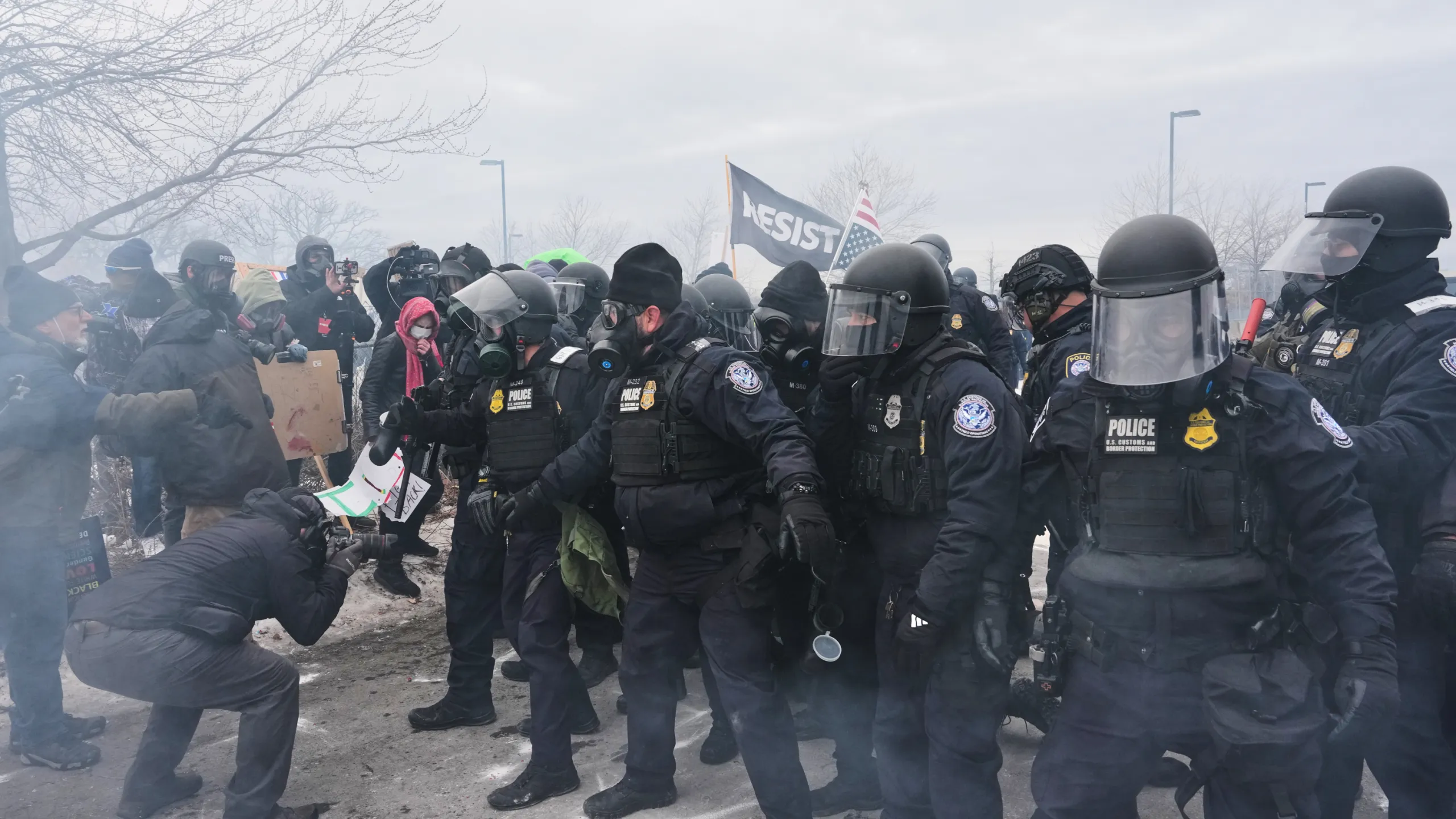
Crowds gathered near the Bishop Henry Whipple Federal Building, where confrontations broke out between protesters and law enforcement. Federal officers in protective gear deployed tear gas and other crowd-control measures after demonstrators blocked access points and threw objects at vehicles leaving the facility. Authorities reported several arrests as they attempted to restore order.
The unrest was triggered by an incident in which a federal immigration officer shot and injured a Venezuelan national during an arrest attempt. Federal officials claim the individual resisted detention and attacked the officer, while two other men allegedly intervened and assaulted the agent. All three were taken into custody.
Anger has been further fueled by the earlier fatal shooting of 37-year-old Renee Good, who was killed by an immigration agent more than a week ago. Her family has demanded that all evidence related to her death be preserved as they consider civil legal action. Newly released reports have shed light on the chaotic moments following the incident, intensifying public concern.
Trump’s Insurrection Act Threat Sparks Legal and Community Backlash
As protests continued, President Trump raised the possibility of invoking the Insurrection Act, a centuries-old law that allows the federal government to deploy military forces domestically during extreme unrest. White House officials described the law as an option available to the president if violence escalates.
Civil rights advocates strongly condemned the threat. The American Civil Liberties Union of Minnesota described the move as dangerous and unnecessary, announcing a class-action lawsuit against the federal government over alleged constitutional violations during recent immigration operations.
The unrest has also disrupted daily life beyond protest zones. In St. Paul, federal agents stopped vehicles carrying students and school staff, prompting school officials to offer virtual learning options for families concerned about safety. As tensions remain high, state and local leaders continue urging calm while warning that further escalation could worsen the crisis.