
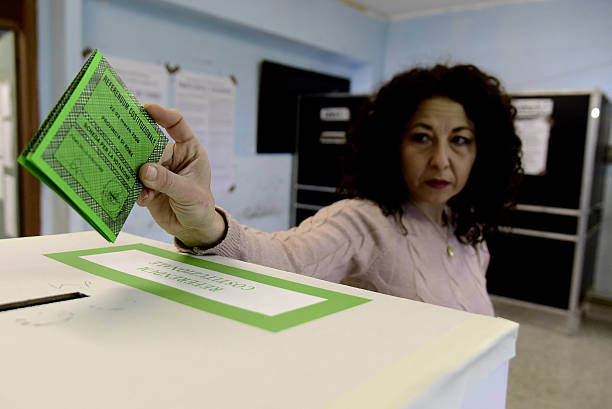
Italy is heading to the polls this weekend for a vote that carries consequences far beyond the courtrooms and judicial chambers at its center. A referendum on sweeping constitutional changes to the country’s justice system has become a direct measure of Prime Minister Giorgia Meloni’s political authority — and the result will reverberate across Italian politics well into the election cycle that lies ahead.
The reforms being put to a public vote would fundamentally restructure how Italy’s judicial system operates. At their core, the proposed changes would formally separate the career paths of judges and public prosecutors, two roles that currently exist within a shared professional framework. The reforms would also divide the High Council of the Judiciary, Italy’s powerful judicial self-governing body, into two distinct entities. These may sound like technical adjustments to those outside Italy, but they touch one of the most persistently divisive fault lines in Italian domestic politics — the relationship between the judiciary and the political class.
Voting opened on Sunday with polls scheduled to close on Monday afternoon. The campaign leading up to the ballot was anything but quiet.
Two Visions of What Justice Requires
Meloni’s right-wing coalition has campaigned vigorously for a yes vote, arguing the reforms are an overdue corrective to a judicial culture compromised by political maneuvering. The specific trigger for the proposed changes was a series of scandals that exposed behind-the-scenes deal-making over senior prosecutor appointments within the judicial council — arrangements that reformers argue made a mockery of institutional independence. In the government’s view, structural separation is the only credible remedy.
The opposition has pushed back with equal force. The Democratic Party and the 5-Star Movement anchored the no campaign, warning that the reforms would do the opposite of what the government claims — that rather than insulating the judiciary from politics, they would expose it to political interference of a different kind, potentially giving the executive branch greater indirect influence over judicial appointments and conduct. Critics framed the entire exercise as an attempt by Meloni to consolidate her grip on institutions that have historically provided a check on government power.
The arguments on both sides reflect a deeper unresolved tension in Italian democracy about who guards the guardians — and whether structural reform serves the public interest or the political interests of whoever happens to be in power when the changes are made.
What the Stakes Are for Each Side
For Meloni, the timing of the referendum is both a challenge and an opportunity. Her government is managing the economic and diplomatic fallout of the Iran war, and the domestic economy has offered little momentum as her mandate approaches its final stretch before a general election due next year. A clear yes victory would deliver a significant boost to her coalition’s standing and validate the reform agenda as a genuine mandate from the Italian public.
For the center-left, which continues to trail Meloni’s bloc in national opinion polling, a no victory would represent something more than a policy win. It would provide tangible evidence that an opposition alliance can mobilize voters on a consequential issue — and potentially serve as the foundation for a broader electoral coalition capable of mounting a credible challenge to the government.
Pre-referendum surveys taken before the mandatory polling blackout began showed the two camps running essentially level. One complicating factor analysts noted was the possibility that some Meloni supporters might simply stay home, viewing the highly technical nature of the reforms as too removed from their everyday concerns to merit the effort of turning out. In a close vote, turnout could prove decisive.