
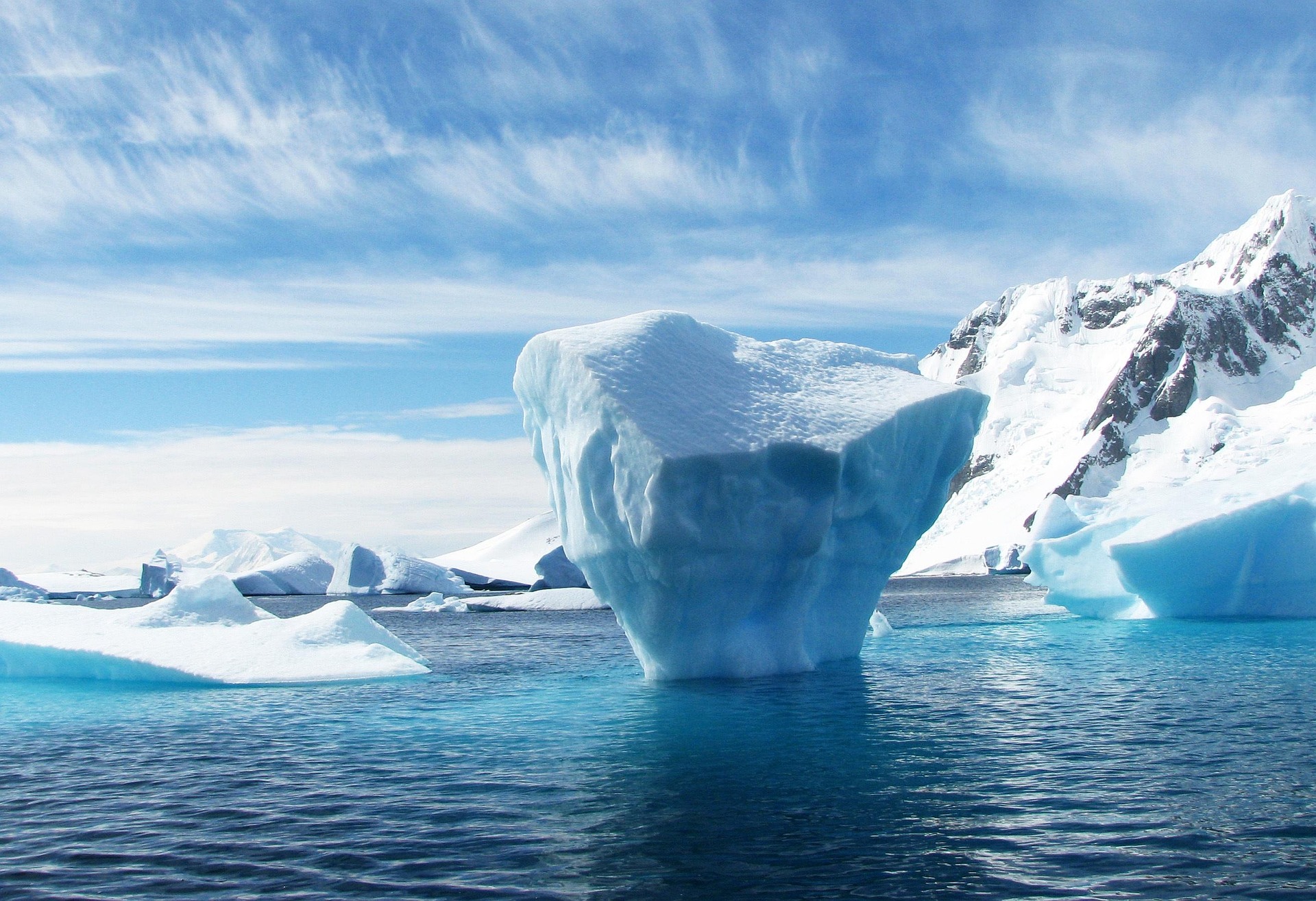
Antarctica’s icy landscape may appear distant from everyday life, but changes there can affect coastlines around the world. Thwaites Glacier, one of the continent’s most closely studied ice formations, is now the subject of new research suggesting its contribution to future sea-level rise may be greater than some earlier estimates indicated.
The glacier has been retreating for decades, and scientists are working to understand the physical processes responsible for its changing structure. A recent modeling study suggests that Thwaites Glacier sea-level rise could reach approximately 30 millimeters by 2100, even without additional global warming. That estimate is about twice some previous projections.
A Glacier Influenced by Ocean Water
Thwaites lies in West Antarctica, where large quantities of land-based ice flow toward the Southern Ocean. Its position makes it particularly sensitive to changes in the interaction between ice and seawater.
The glacier’s floating ice shelf helps resist the movement of ice from the continent toward the ocean. When the shelf thins or loses stability, the ice behind it can flow more easily toward the sea.
Warm seawater contributes to this process by melting ice from below. The effects are especially important near the grounding zone, where ice resting on the seabed begins to float.
Understanding this area is essential to estimating how Thwaites Glacier sea-level rise may develop over the coming decades.
A More Detailed Model Changes the Outlook
Researchers from the University of California, Irvine, and NASA’s Jet Propulsion Laboratory developed a model that accounts for seawater moving through a grounding zone several kilometers wide.
Earlier approaches often represented the transition between grounded and floating ice as a relatively sharp boundary. However, satellite observations indicate that tides can lift and lower the ice, allowing ocean water to move into spaces beneath it.
The new model reproduced historical retreat and thinning more accurately when it included this broader zone. Researchers then used it to explore how the glacier might change in the future.
Their projections suggest that the ice could become detached from an underwater ridge that currently helps slow its retreat. This process may begin as early as 2038, although the timing remains uncertain.
Why Coastal Communities Should Pay Attention
The estimated contribution of 30 millimeters to global sea levels by 2100 is not a prediction of the glacier’s complete collapse. It represents a modeled contribution from Thwaites alone under the study’s assumptions.
Even relatively small increases in average sea level can worsen coastal flooding, particularly during storms and unusually high tides. The effects may be especially serious for low-lying communities and infrastructure already exposed to rising waters.
Thwaites also helps restrain ice farther inland. If the glacier becomes less stable, additional ice could eventually enter the ocean, creating a much larger long-term concern.
The potential impact of Thwaites Glacier sea-level rise therefore extends beyond the glacier itself, although the scale and timing of future changes remain uncertain.
Research Remains Essential
Scientists still need direct observations beneath the glacier to confirm how seawater moves through the grounding zone and how quickly the ice responds. Better measurements can help improve predictions and reduce uncertainty in future climate assessments.
The latest research demonstrates that small details in how scientists represent ice and ocean interactions can substantially change their forecasts.
Understanding Thwaites Glacier sea-level rise is an important part of preparing for future coastal risks. Continued research, alongside efforts to limit global warming and strengthen coastal resilience, will help communities make better-informed decisions about the decades ahead.