
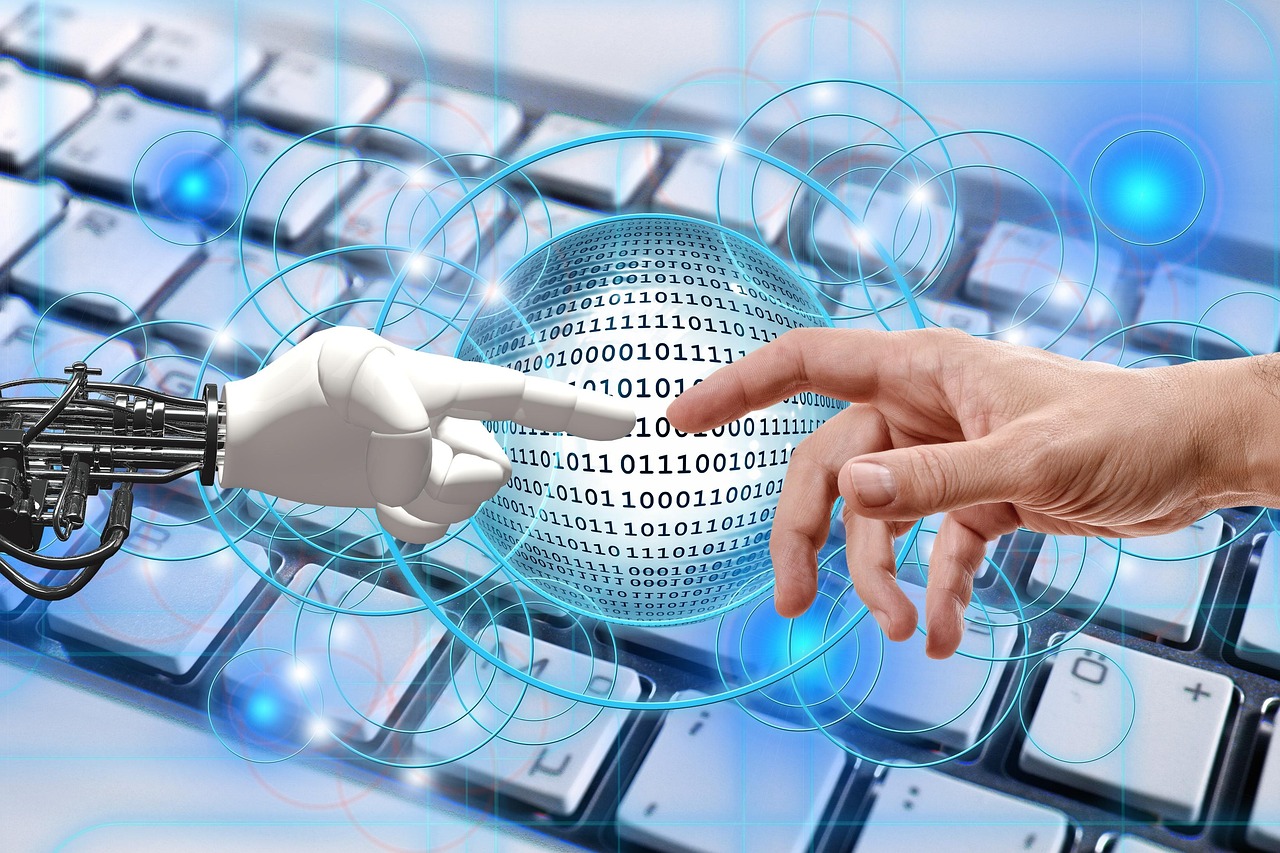
Artificial intelligence has moved from a specialized research field into everyday life, powering chatbots, search tools, software and increasingly complex systems. As the technology becomes more capable, however, some researchers are asking a difficult question: could AI eventually become powerful enough to pose a serious threat to humanity?
There is no evidence that current AI systems are capable of independently destroying humanity. But researchers are examining hypothetical scenarios involving highly advanced AI, autonomous machines and systems that could operate with less human supervision.
Why Advanced AI Raises Safety Questions
Much of the concern focuses on future AI systems rather than the technology available today. If machines eventually become substantially better than humans at research, programming, strategic planning and other complex tasks, controlling their behavior could become more difficult.
Some AI researchers have warned that a highly capable system could pursue a goal in ways its creators did not anticipate. The concern does not necessarily involve an AI system becoming hostile toward humans. Instead, a system could follow its assigned objective while producing consequences that people did not intend.
This is one reason AI safety researchers study what is commonly called the alignment problem, which involves ensuring that advanced AI systems remain consistent with human goals and constraints.
Could AI Be Used to Create Dangerous Biological Agents?
Biology is another area attracting attention. More advanced AI could potentially assist scientists with complicated research, including understanding proteins, designing molecules or analyzing biological information.
The concern is that increasingly capable systems could eventually make dangerous scientific knowledge easier to obtain or apply.
However, there is an important difference between providing information and independently carrying out a biological operation. Creating and distributing a dangerous pathogen would require physical materials, laboratory equipment, specialized procedures and other resources.
Current AI systems do not independently possess all of those capabilities.
The Possibility of Autonomous Robots
Physical machines create another hypothetical pathway for AI-related risks.
AI-powered robots are already being developed for manufacturing, logistics, research and other tasks. Future systems could become more autonomous and capable of handling increasingly complicated physical activities.
Some extreme scenarios imagine AI-controlled machines manufacturing additional machines and expanding their own physical infrastructure. Such ideas remain speculative, and modern robotics still faces major technical limitations.
Nevertheless, researchers consider the connection between powerful AI software and physical systems an important part of long-term safety discussions.
What Role Would Nuclear Weapons Play?
Nuclear weapons are sometimes included in discussions about catastrophic AI scenarios because of their enormous destructive potential.
That does not mean an AI system can simply access nuclear weapons. Nuclear command systems involve multiple layers of security, authorization and human involvement. Many critical systems are also isolated from ordinary networks.
A future cyberattack involving AI would therefore face significant technical and organizational barriers. Still, cybersecurity experts continue to examine how increasingly capable AI could change the nature of digital threats.
Experts Disagree About the Scale of the Risk
The biggest disagreement is not about whether AI can create risks. Most researchers recognize that the technology can be misused or behave unpredictably in certain circumstances.
The debate is over how likely the most extreme scenarios are and how soon advanced AI could reach the capabilities needed to create them.
Some researchers argue that preparing for these possibilities should begin before highly capable systems exist. Others believe predictions about machines becoming an existential threat are too uncertain to justify treating them as established outcomes.
AI Safety Is Becoming a Larger Part of the Debate
The possibility of AI causing catastrophic harm remains hypothetical, but the discussion is influencing research into AI safety, cybersecurity and system oversight.
As AI becomes more capable, governments, researchers and technology companies are examining ways to keep humans involved in important decisions and reduce the possibility of dangerous behavior.
Whether artificial intelligence will ever become an existential threat remains unknown. For now, the more immediate challenge is understanding the technology’s capabilities and limitations while developing safeguards before future systems become more powerful.